

Address:
80 Main Street
Senoia, GA 30276
Phone: (770) 599-3679
Fax: (770) 599-0855
History of Senoia, Georgia
In the Beginning...
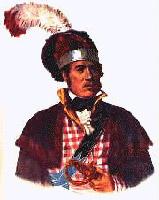
Coweta County (pronounced "Cow-eeta" or "Ky-eeta" and meaning "water falls") was formed in Georgia in June 9, 1825 as Chief William McIntosh signed the Treaty of Indian Springs, for which he was soon killed by his fellow Creek Indians. Settlers migrated to the area following the Fifth Land Lottery of 1827.Gerrard M. Veal, a minor, received land lot 279, the 202.5 acres that became present day Senoia.
Around 1828, a large number of people traveled from Newberry, South Carolina, in covered wagons, oxcarts, on horseback, and by foot. In the group were preachers, farmers, masons, and most any other occupation of the day. The names read like a current register of the area, since these forerunners have numerous descendants still making their homes in Senoia. In the group from South Carolina were the Atkinsons, Addys, Pages, Youngs, Levells, Shells, Barnes, Falls, Moses and many others. They scattered across the countryside, each trying to find a new start. And find it they did in the rich land of eastern Coweta. Raising cotton, corn, and livestock, the area was an agricultural Utopia.
Many of Senoia's residents migrated from Newberry, South Carolina. Shown is Newberry's "Old Courthouse."
Location, Location, Location...
The first "settlement" in the area was called Location, two miles south of present day Senoia, where a post office had been established. In 1854, Willow Dell was established. Settlers continued to move to the area. The founding date for Senoia is 1860, for in that year the Rev. Francis Warren Baggarly bought land on which the modern town of Senoia now sits. On October 9, 1864, after many of the people of Willow Dell had moved closer to the two railroads that ran through the area, the community was renamed Senoia, and a post office was reestablished. The first building to be erected was known as the Rock House. Intended for mercantile purposes, it soon became a commissary for the Confederacy, as the war broke out soon after its completion. The first church,a Methodist Episcopal, with the Rev. Baggarly as minister, and the first Sunday school was also organized in the upstairs. A high school was opened in 1865, quite an accomplishment for a rural southern town at the end of the civil war.
Post Civil War
After the war, Senoia saw the completion of the Savannah, Griffin and North Alabama Railroad, which crossed through the town. Agricultural products such as cotton and peaches were shipped by rail from Senoia. Senoia was officially incorporated as a city on December 12, 1866. Pride in their town was very evident, as the citizens aspired to have the county seat moved there in 1876. Their bid was unsuccessful. Today with its collection of architectural treasures, most of the town comprises a historic district on the National Register of Historic Places. Senoia was officially chartered as a city around 1905, about the same time the railways moved in. The city still features architecture from all those periods - including structures dating to the 1840s - with most of the architecture from the city's charming downtown dating from the turn of the century.
Senoia has one known citizen who died in combat. Edward Couch was killed in action in Vietnam. The city of Senoia honored its lone fallen hero by naming its newestbridge in his honor in 2001.
Where the name Senoia came from is difficult to determine. There are four main variations to the origins of the name Senoia. They are listed below in the order of their likelihood as the source for the name Senoia.
- Senoya He-ne-ha was the wife of Captain William McIntosh. Their son, also named William McIntosh was both a General in the army and a chief in his band of Creek Indians. Senoya was a member of the prestigious Wind Clan of the Creek Indians. This is what established the idea of "Princess Senoia."
- From an edition of a one-time Senoia paper, the Enterprise-Gazette, comes this quotation concerning the naming of the town: "John Williams suggested the name Senoia for an Indian Chief of that name, a medicine man and philanthropist, noble, brave, and generous, who lived near the present location of Sargent.
- Another newspaper account in 1873 held that Colonel William C. Barnes came up with the name in honor of a clever Indian who formerly resided in the community.
- Others say that Senoia comes from an Indian word for the title of Chief William McIntosh, Shenoywa.
Another thing for visitors to Senoia to note: Although you might think that Senoia would most likely be pronounced "Seh-noy-yuh", don't be fooled. Locals here simply call it "Seh-noy." If you want to stand out like a sore thumb, feel free to mispronounce Senoia. No one will say anything, but every one will know you are not a "local"!
Special Thanks to the Senoia Historical Society for their help with this brief history.
Senoia Area Historical Society
PO Box 301
Senoia, GA 30276
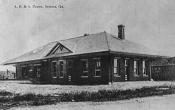
Two intersecting railroads are much of the reason that Senoia is located where it is.
(Pictured is the old depot, which no longer stands.)